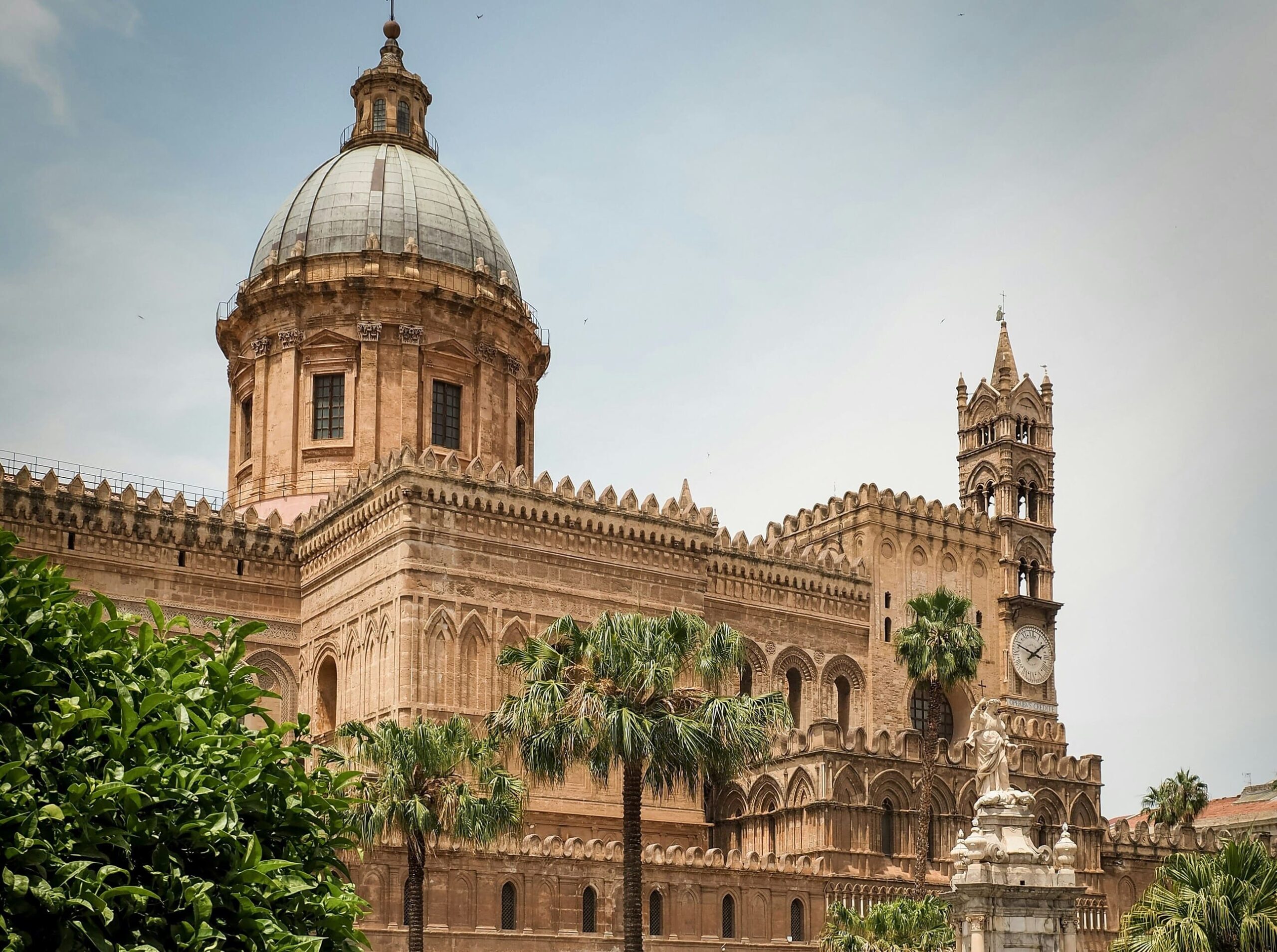
Sicily is home to cities, beaches and landscapes that have long captured travellers’ imaginations. Yet alongside its most celebrated destinations are places that invite you to see the island from a different perspective.
They are seaside villages, stretches of still-wild coastline, sanctuaries suspended between sky and sea, and hill towns surrounded by vineyards and countryside. Some attract relatively few visitors; others are known mainly for a single landmark, yet reveal far more to those who choose to linger.
From Palma di Montechiaro to the sea stacks of Aci Trezza, these eight places reveal a more intimate, scenic and surprisingly varied side of Sicily.
Palma di Montechiaro: aristocratic heritage and a wild coastline
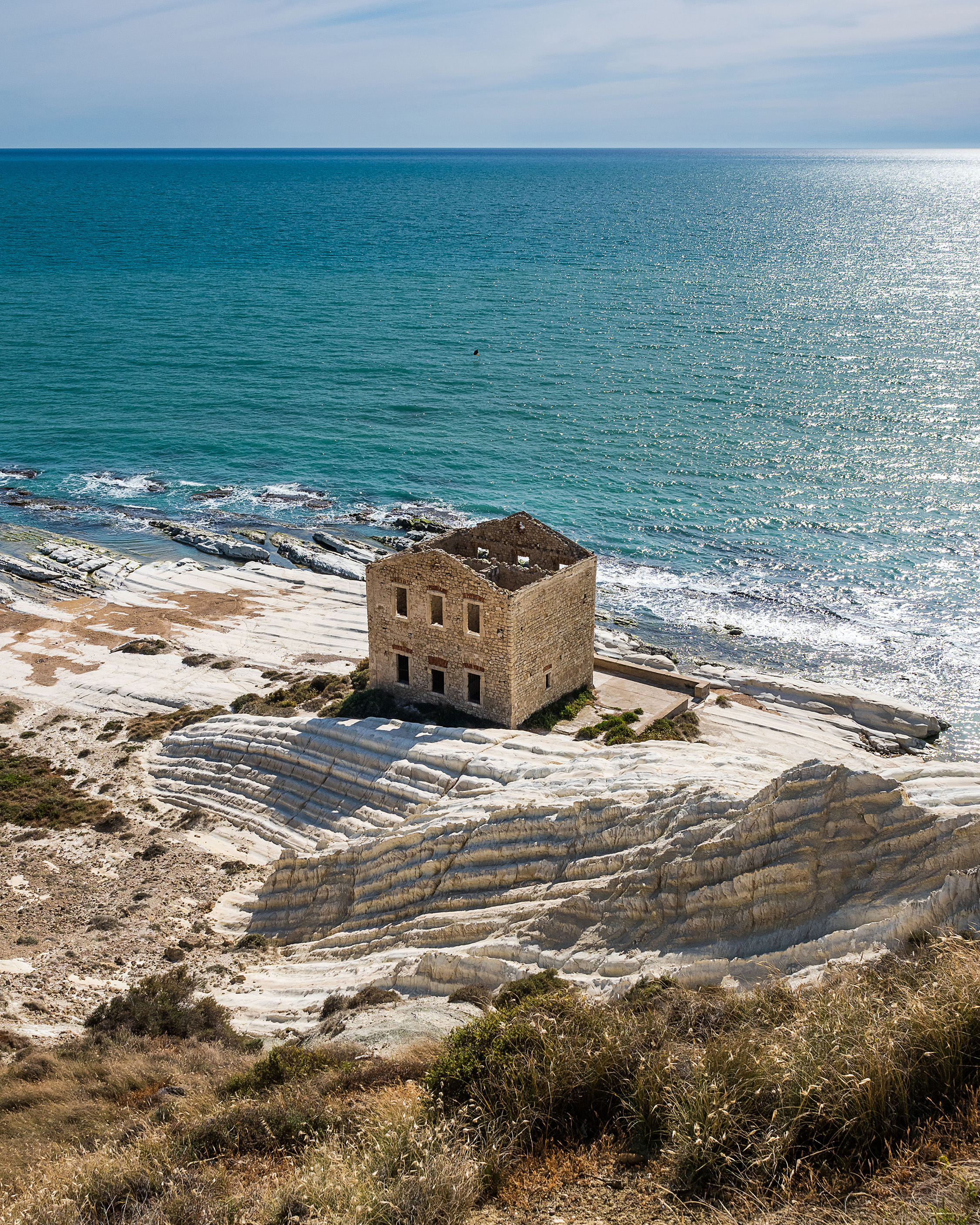
Palma di Montechiaro has two seemingly contrasting souls. Inland, its story is shaped by the Tomasi family, aristocratic palaces, churches and the Benedictine monastery. Along the coast, however, the landscape becomes more elemental, sculpted by pale rock, open sea and isolated historic buildings.
The town was founded in 1637 by the Tomasi family and retains a strong connection with the literary world of Giuseppe Tomasi di Lampedusa and Il Gattopardo.
Its most important landmarks include the Mother Church, the Ducal Palace and the Benedictine monastery.
Yet it is beyond the town centre that Palma reveals its wildest side: a wide, luminous coastline where traces of human presence seem almost to dissolve into the landscape. Its appeal lies not only in its monuments, but in the contrast between the town’s aristocratic heritage and the rugged nature of its shoreline.
Torre Salsa: the luxury of space
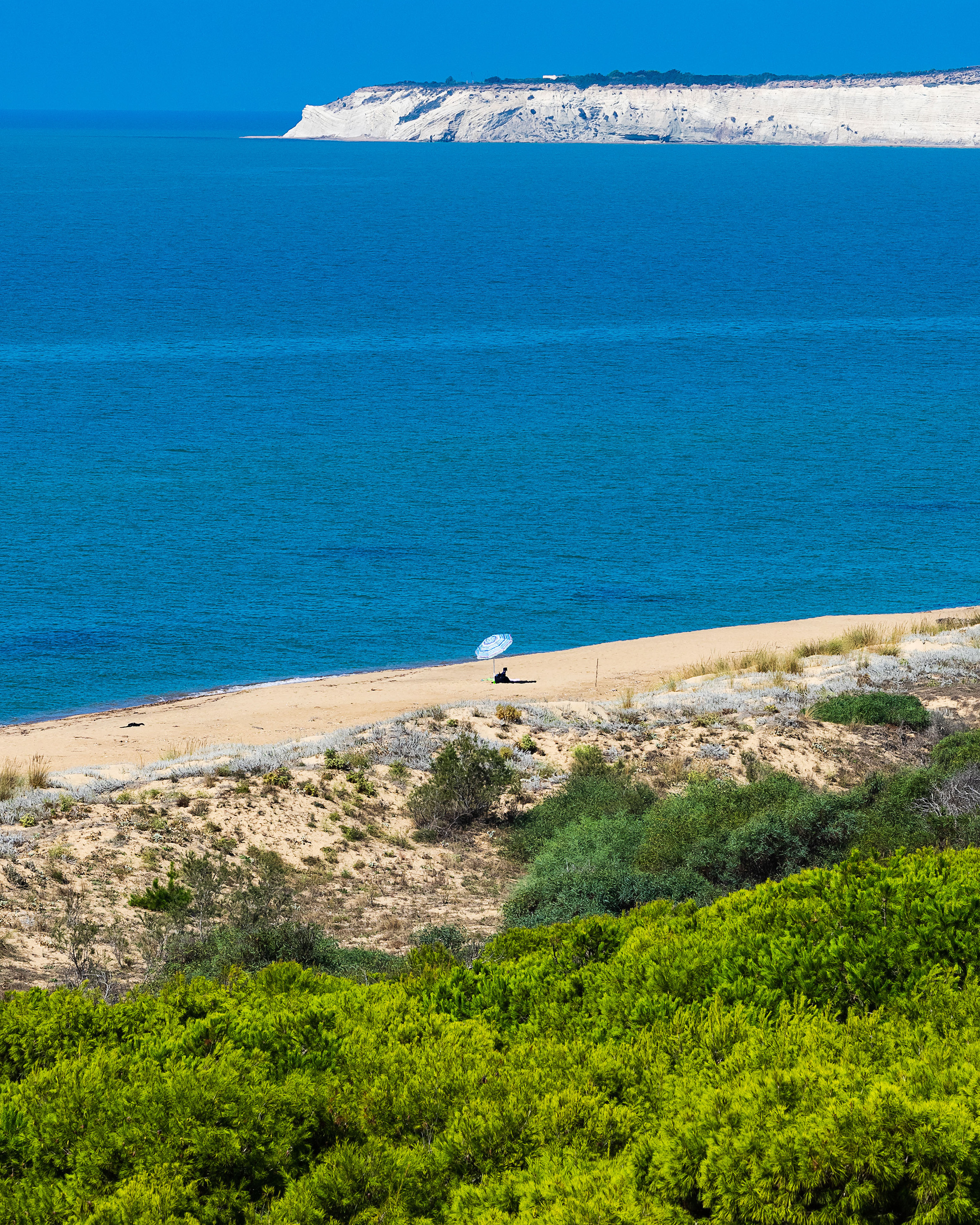
The first thing that strikes you at Torre Salsa is the sense of space. The beach stretches beneath white cliffs and hills covered in Mediterranean scrub, while the sea fills almost the entire horizon.
The absence of large beach clubs, buildings and developed seafront promenades makes this stretch of the Agrigento coast feel entirely different from the island’s busier seaside resorts.
The nature reserve protects a landscape of dunes, rocky cliffs, wetlands and beaches that have retained their natural character. Torre Salsa is part of Italy’s network of WWF nature reserves.
It is a place best enjoyed simply: arrive early, walk along the shore, swim and let the sea set the pace of the day. A solitary figure beneath a beach umbrella, almost lost within the landscape, perfectly captures the spirit of this destination.
Sampieri: a day by the sea beneath the Fornace Penna
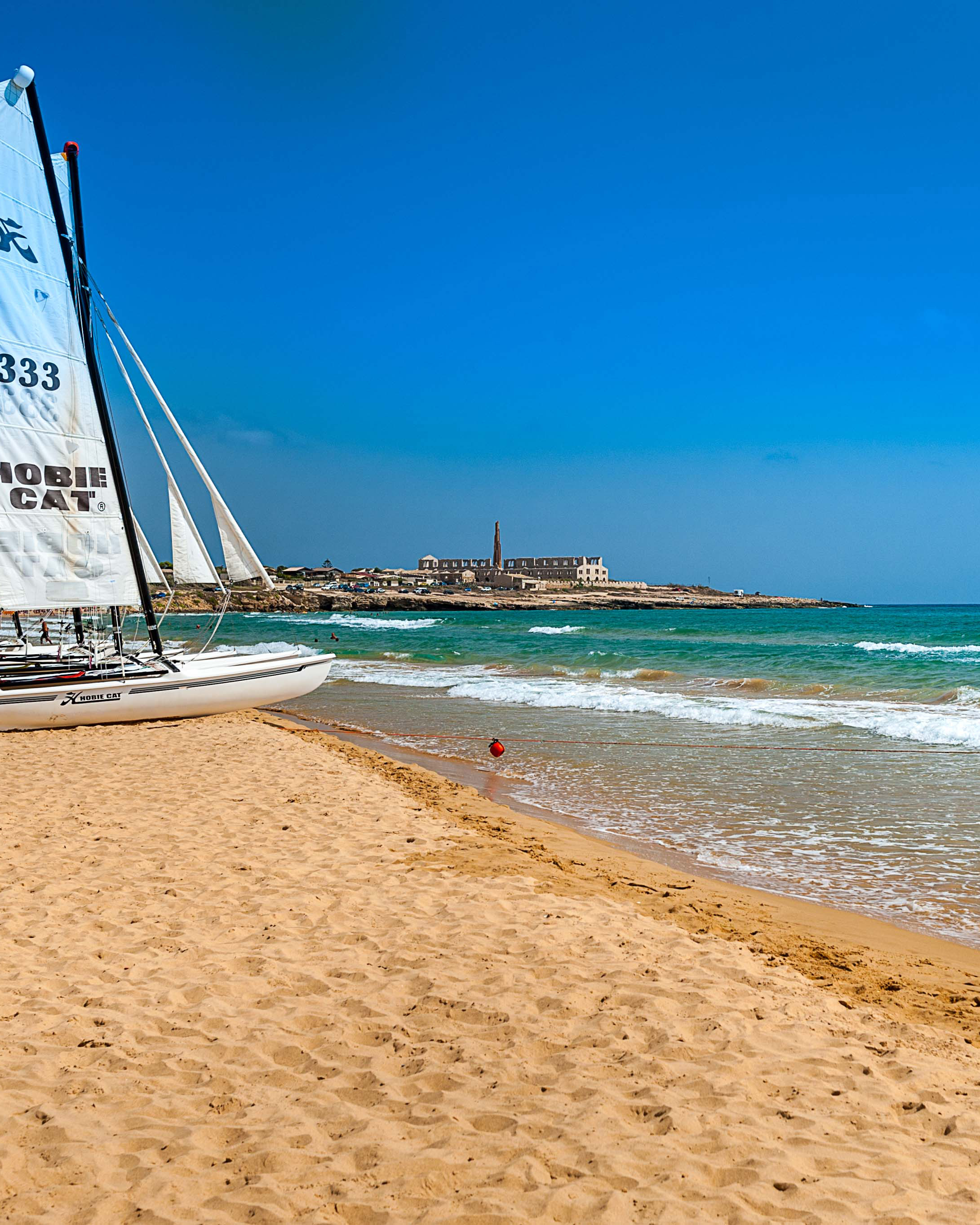
Sampieri is, first and foremost, a seaside village. Its long golden beach invites you to spend the day swimming, walking and enjoying the water, while at the far end of the bay an unexpected silhouette appears: the Fornace Penna.
Built in 1912 and abandoned in 1924, this former brickworks is now one of Sicily’s most recognisable examples of industrial archaeology. Its monumental structure, often described as a “cathedral by the sea”, dominates Punta Pisciotto and creates an unusual contrast with the easy-going atmosphere of the beach.
It is precisely this layering that makes Sampieri so distinctive: white sails, sand, families by the water and, in the distance, a building weathered by time. A landscape that feels both everyday and cinematic.
Tindari: a panoramic road between the sanctuary and the Aeolian Islands
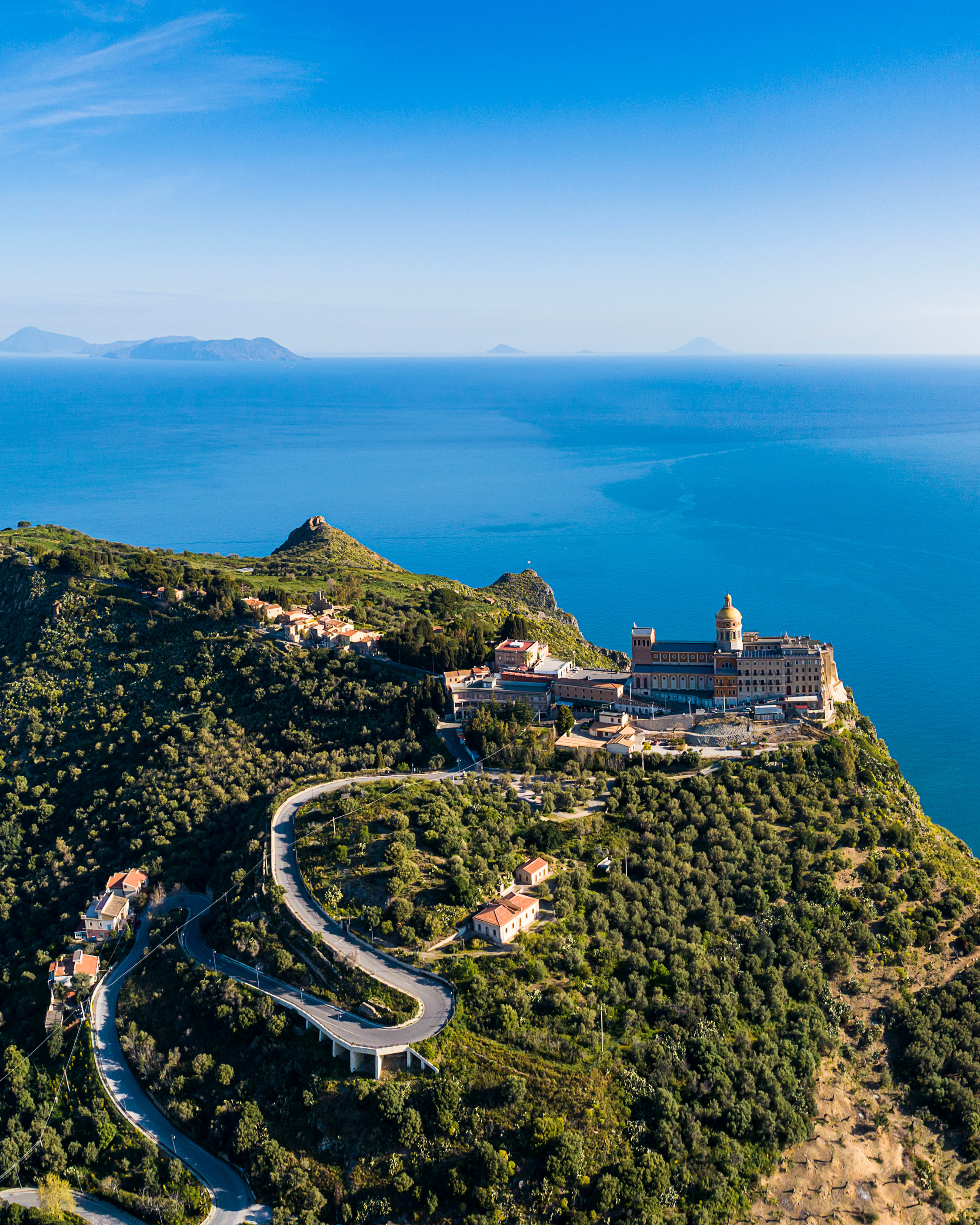
Reaching Tindari means climbing towards one of the most spectacular viewpoints on Sicily’s Tyrrhenian coast. The road winds around the headland towards the sanctuary, while the sea opens out ahead as far as the Aeolian Islands.
The site brings together different periods and meanings. The ancient city preserves its theatre and traces of the Greco-Roman settlement, while nearby, the Sanctuary of the Black Madonna draws both visitors and pilgrims. At the foot of the headland lie the Marinello lakes, formed by shifting tongues of sand and coastal lagoons.
The sanctuary appears suspended on the hillside, with the sea and islands beyond. More than any individual attraction, it is this extraordinary setting that makes Tindari unforgettable.
Sambuca di Sicilia: a hill town among vineyards and Arancio lake
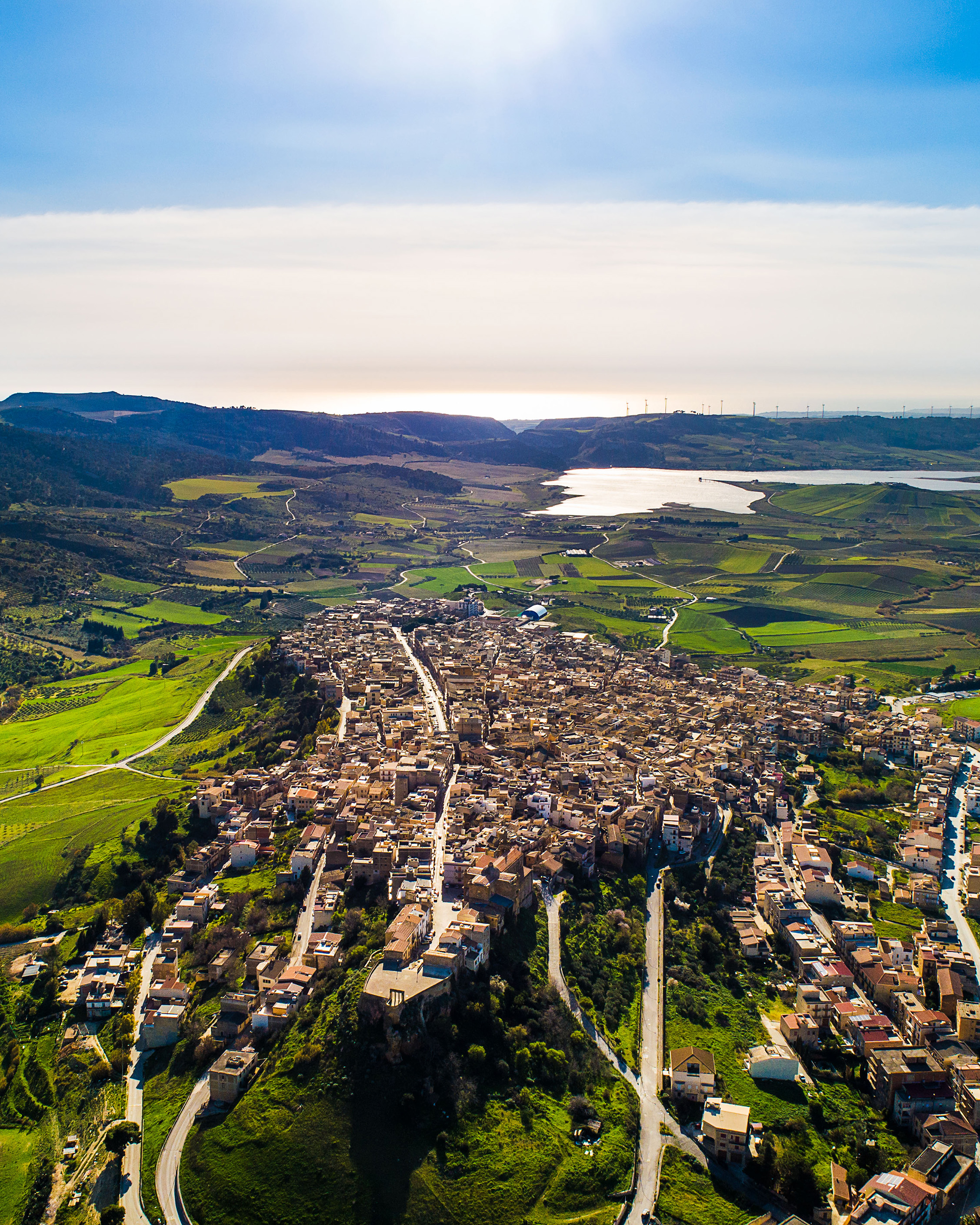
Seen from above, Sambuca di Sicilia appears as a compact cluster of houses nestled among cultivated hills, vineyards and the waters of Arancio lake. Even before entering its historic centre, the surrounding landscape reveals the town’s deep agricultural identity.
Sambuca’s origins are linked to the Arab settlement of Zabut. Its oldest quarter still preserves a maze of lanes, courtyards and irregular passageways, joined over the centuries by churches, palaces and Baroque squares. The surrounding countryside is dotted with vineyards, olive groves and rural tracks.
Its food also tells the story of these cultural layers. The minni di virgini, traditional filled pastries closely associated with the town, have become one of Sambuca’s culinary symbols.
The best way to discover it is to move between the historic centre and the surrounding landscape: wander through the lanes, stop at a viewpoint and make time to sample the wines and flavours of the area.
Cornino: sunset by the sea in western Sicily
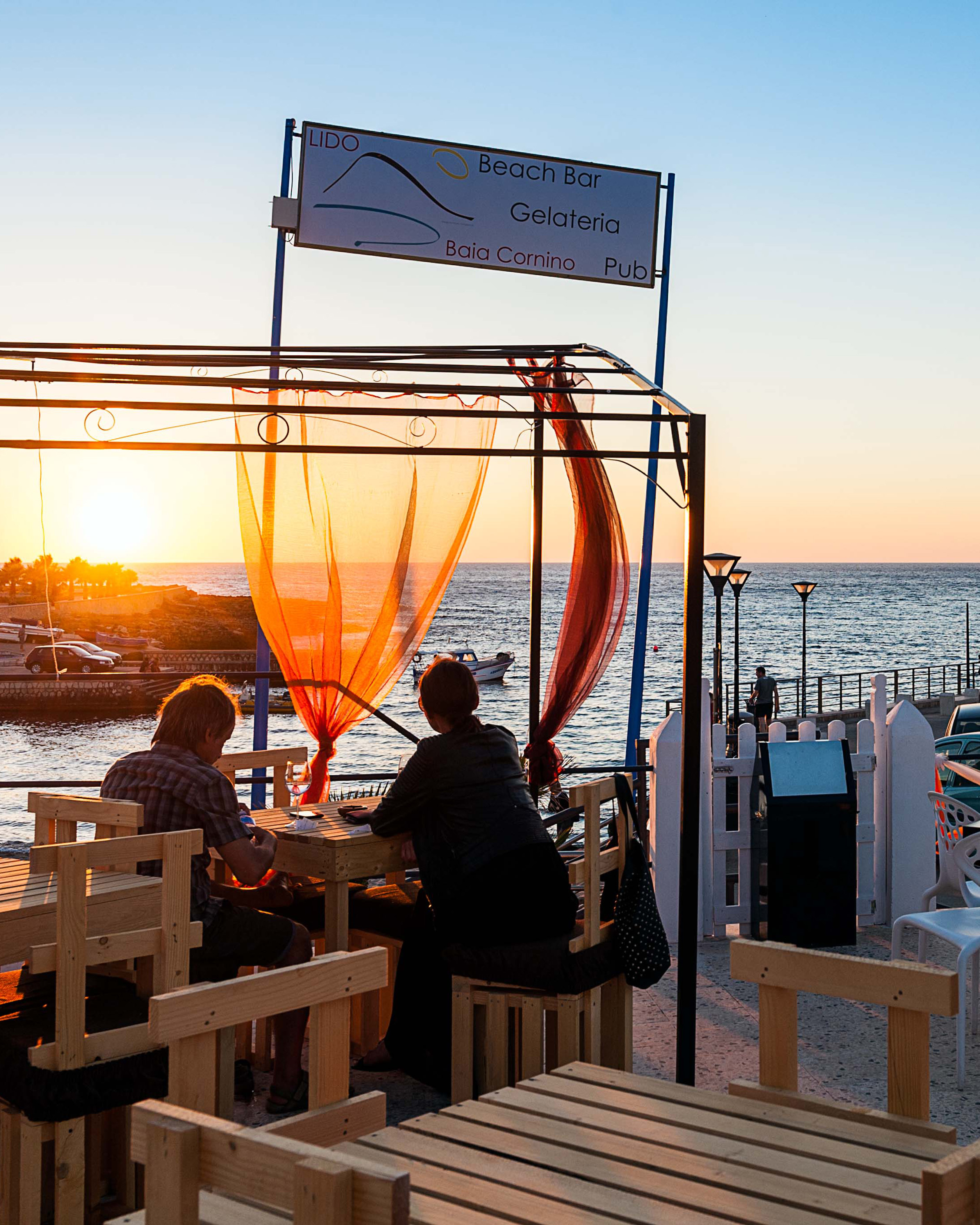
Cornino changes character throughout the day. In the morning, the clear sea, rocks and beaches beneath Monte Cofano take centre stage. At sunset, the bay becomes somewhere to slow down, with small waterfront venues, outdoor tables and boats returning to the harbour.
This is not an entirely isolated coastline, but a small seaside village where you can sit beside the water as the light grows warmer. Cornino is also a convenient starting point for exploring the area around Custonaci. Nearby are the Monte Cofano Nature Reserve and the Mangiapane Cave, a vast natural cavern containing an old rural settlement inhabited from the nineteenth century onwards.
It is an ideal destination for anyone seeking a day of sea, nature and an unhurried aperitif at sunset.
Savoca: a balcony above the Ionian coast
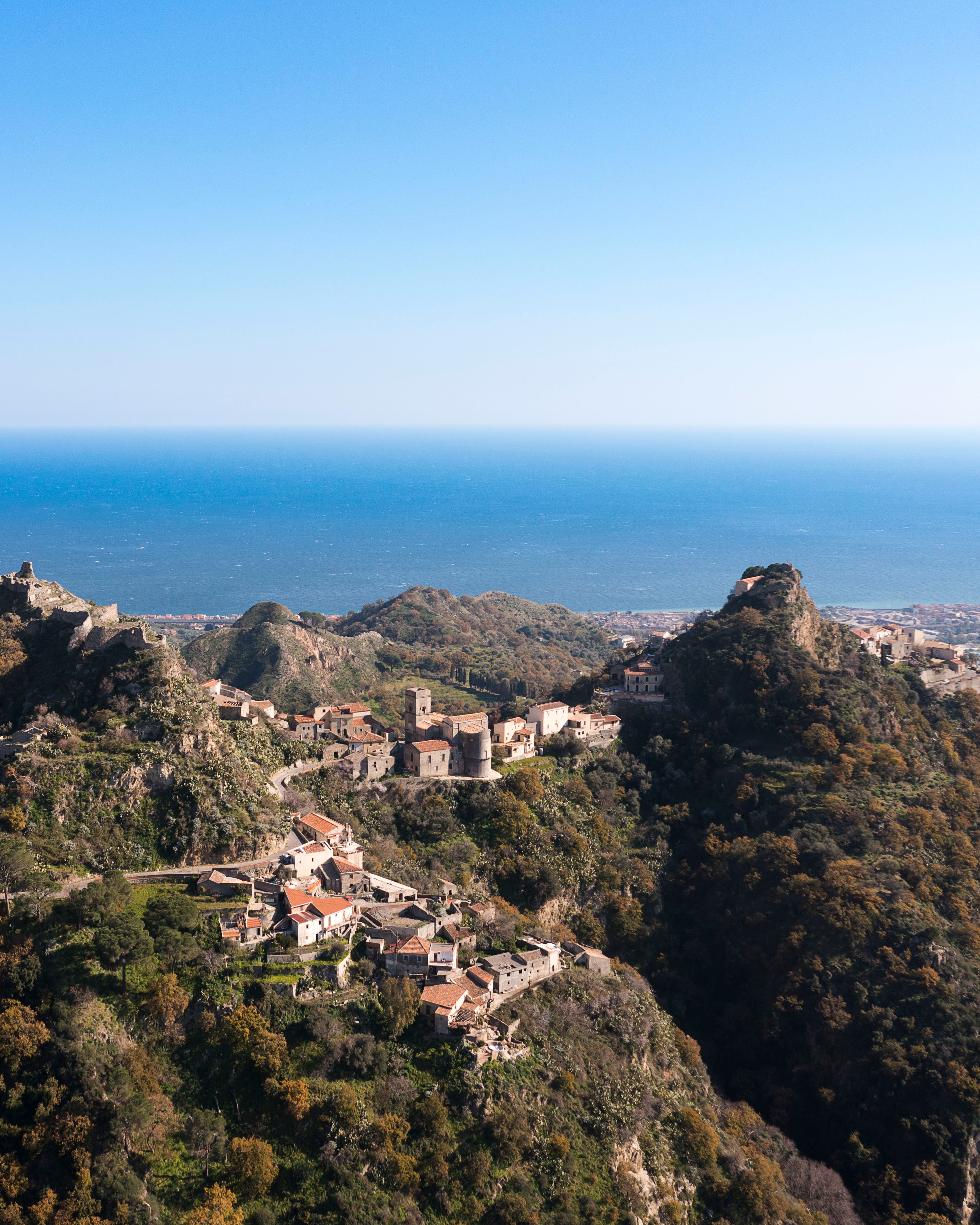
Savoca seems to follow the contours of the mountain itself. Houses, churches and streets spread along the hillside, while around each bend the landscape opens towards the Ionian coast.
From this perspective, it is easy to understand why the village was chosen as a film location. Bar Vitelli and the Church of San Nicolò are both associated with the filming of The Godfather, but they represent only one part of Savoca’s identity.
Above all, Savoca is a place for walking. Its stone streets lead to churches, ruins, small squares and panoramic viewpoints. The Capuchin convent also contains a crypt where the mummified remains of members of local society are preserved.
Rather than following a checklist of attractions, it is worth allowing the shape of the village to guide you: climb, pause, glimpse the sea between the hills and watch the landscape change around every corner.
Aci Trezza: sunset between myth and lava rock
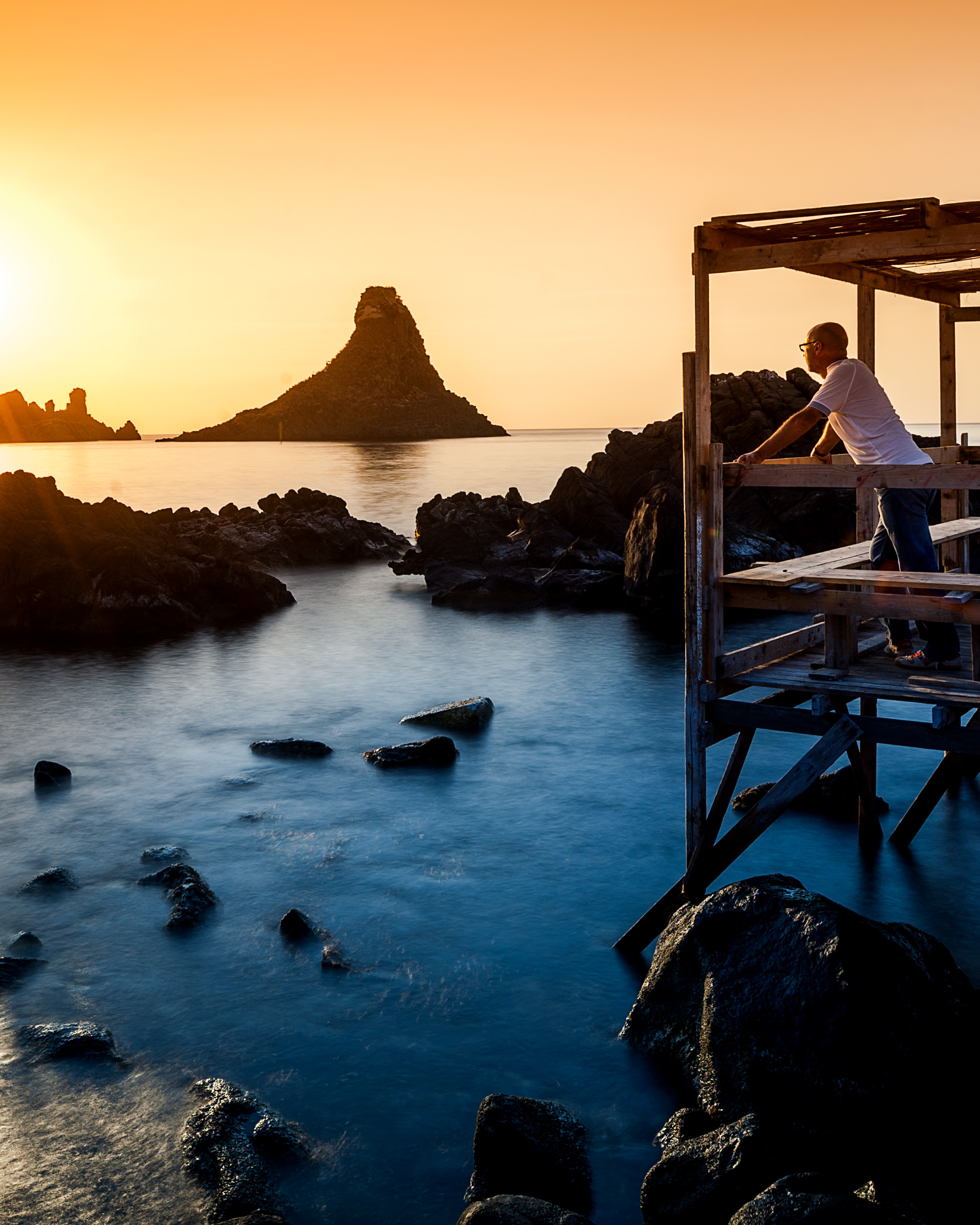
In Aci Trezza, the sea meets black volcanic stone. Just offshore, the Cyclops sea stacks rise from the water, giving the coastline one of the most recognisable profiles in eastern Sicily.
These basalt formations and volcanic rocks are connected both to the geological history of Mount Etna and to the myth of Polyphemus and Odysseus. The village also has strong links with Giovanni Verga and the world of I Malavoglia. Housed in a nineteenth-century home, Casa del Nespolo also preserves material connected with Luchino Visconti’s film La terra trema.
Yet Aci Trezza is perhaps best understood at the end of the day. As the light fades behind the sea stacks, the rocks become dark silhouettes and the village seems suspended between the life of the harbour and the world of myth.
It may be a well-known destination, but it offers a different perspective depending on the time of day, the quality of the light and the point from which you look out across the sea.
A Sicily to explore slowly
These eight places are not united by being entirely unknown. Some already feature on the island’s most popular itineraries, while others remain secluded and quiet.
What they share is the opportunity to discover a Sicily far removed from rushed sightseeing.
These are destinations that ask for time: time to follow a panoramic road, wait for sunset, observe a distant building along the coast or wander through a village without a fixed destination.
Because the most authentic part of a journey is not necessarily found in the most secret place, but in the way we choose to see it.
Photos: Alfio Garozzo